
Introduction
In modern manufacturing, efficiency and precision are everything. Whether producing automotive components, electronic housings, or consumer goods, industries rely heavily on metal forming tools to achieve consistent quality at high speed. One of the most essential components in this process is the Press Tool. A press tool allows manufacturers to shape, cut, bend, punch, and form sheet metal with remarkable accuracy. Because of its versatility and cost-efficiency, it remains a critical asset in mass-production environments. This article explores what a press tool is, its types, applications, materials, and advantages—providing a thorough understanding for engineers, manufacturers, and students alike.
What Is a Press Tool
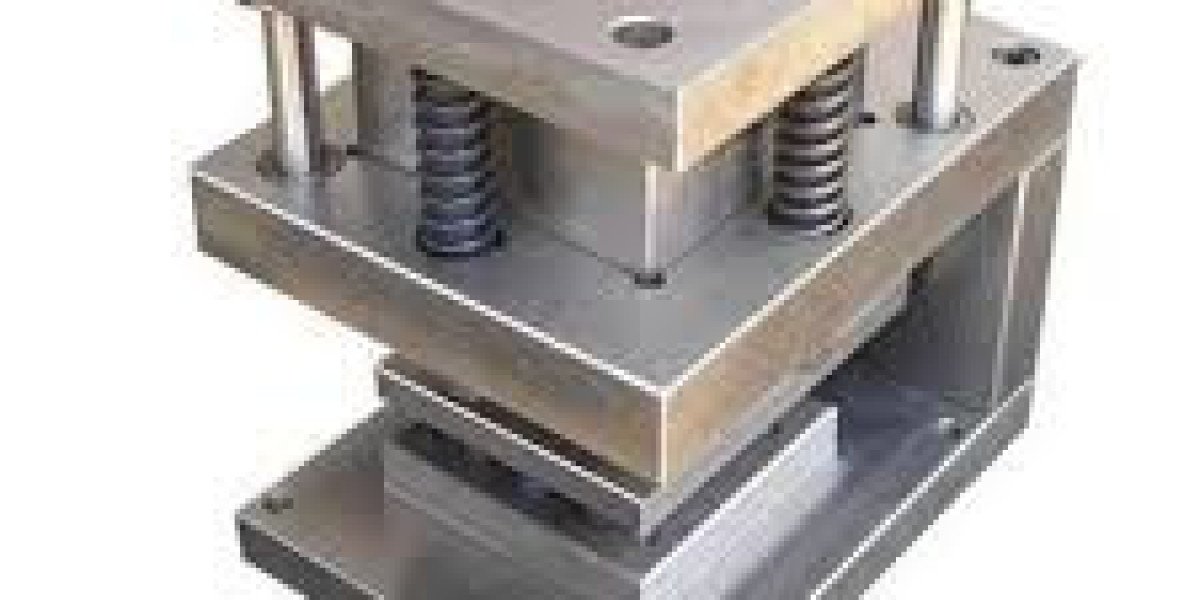
A Press Tool is a specialized mechanical device used with a press machine to convert sheet metal into desired shapes through different metal-forming operations. It works by placing the sheet metal between two components—the punch and the die. When force is applied, the press tool creates a permanent deformation, producing components with precise dimensions.
Press tools are integral to industries where repeatability, accuracy, and speed are crucial. They make possible the mass production of parts that must meet strict tolerances, and they do so with minimal waste.
Key Components of a Press Tool
While designs vary depending on the operation, most press tools share several essential components:
Punch
The punch is the male component that pushes into the material, shaping or cutting it.
Die
The die is the female component that receives the punch. It determines the shape of the final product.
Stripper Plate
This component removes the sheet metal from the punch after each cycle.
Guide Pillars and Bushes
They ensure alignment between the punch and die during each operation.
Punch Holder & Die Holder
These keep the components fixed and stable within the press machine.
Understanding these components is important because the performance of any Press Tool relies heavily on the precision of each part.
Types of Press Tools
Press tools are classified based on the type of operation they perform. Here are the most widely used types:
Blanking Tool
A blanking tool cuts out a flat piece, known as a “blank,” from sheet metal. This blank is later used for further forming operations.
Piercing Tool
This tool creates holes in sheet metal. It’s commonly used in automotive and electrical component manufacturing.
Bending Tool
A bending press tool bends sheet metal at defined angles. It is ideal for brackets, frames, and enclosure production.
Forming Tool
This tool shapes metal into a three-dimensional form without removing material. It is used in making cups, shells, and casings.
Drawing Tool
Used for deep drawing operations—such as making kitchen sinks, cans, or automotive fuel tanks—this tool stretches the material into a desired depth and shape.
Compound Tool
A compound press tool performs multiple operations (like blanking and piercing) in a single stroke, increasing productivity.
Progressive Tool
The progressive press tool is one of the most advanced. The metal strip moves through several stations, with each station performing a specific operation. By the final station, a complete part is produced with every stroke.
Combination Tool
This tool combines cutting and forming processes, ideal for complex, multi-step component production.
The wide variety of tool types ensures that manufacturers can find a Press Tool perfectly suited for their production needs.
Materials Used in Press Tools
The durability of a press tool depends greatly on the material used in its construction. Common tool materials include:
High-Speed Steel (HSS)
Known for excellent wear resistance and toughness.
Carbide
Used for very high-volume production because it resists wear exceptionally well.
D2 and D3 Tool Steel
Popular for general-purpose press tools due to hardness and dimensional stability.
Spring Steel
Used for components like strippers and springs.
Choosing the right material ensures the press tool performs optimally and has a long service life.
Applications of Press Tools
Press tools are used across virtually every manufacturing sector. They are essential for high-volume and precision productions such as:
Automotive parts (brackets, washers, body parts)
Electrical components (switch plates, connectors)
Aerospace parts (lightweight structural components)
Consumer electronics (metal housings, frames)
Home appliances (metal covers, handles)
Packaging industry (cans, containers)
Because of these applications, the demand for reliable Press Tool solutions continues to grow globally.
Advantages of Using a Press Tool
Press tools offer several notable benefits, making them indispensable in industrial operations.
High Productivity
Press tools can produce thousands of identical parts per hour, making them ideal for mass production.
Excellent Precision
With tight tolerances and consistent results, they ensure high-quality components.
Cost Efficiency
Although the initial investment may be high, long-term production cost per component is extremely low.
Reduced Waste
Press tools maximize material utilization, especially in blanking and piercing operations.
Versatility
From simple shapes to highly complex forms, press tools can handle a wide variety of designs.
Durability
Quality press tools last for millions of cycles before requiring maintenance or replacement.
Future Trends in Press Tools
With advancements in manufacturing, press tools are evolving rapidly. Some emerging trends include:
Automation integration, enabling fully automatic press lines
Smart sensors to monitor wear and prevent tool failure
3D printing for rapid prototyping of dies
Lightweight materials for efficient metal forming
These innovations ensure the Press Tool continues to be a cornerstone of modern production.
Conclusion
A Press Tool is far more than just a mechanical component—it is a key driver of industrial productivity, precision, and innovation. From stamping automotive parts to forming delicate electronic components, press tools enable manufacturers to produce consistent, high-quality parts at incredible speed.
See more our website:visit here