
Solar power plants now depend heavily on data. Operators track inverter output, grid performance, and equipment health every minute. Reliable monitoring helps maintain energy yield and detect faults early. Many solar inverters still communicate through RS-485 serial networks. However, modern analytics tools operate in cloud platforms.
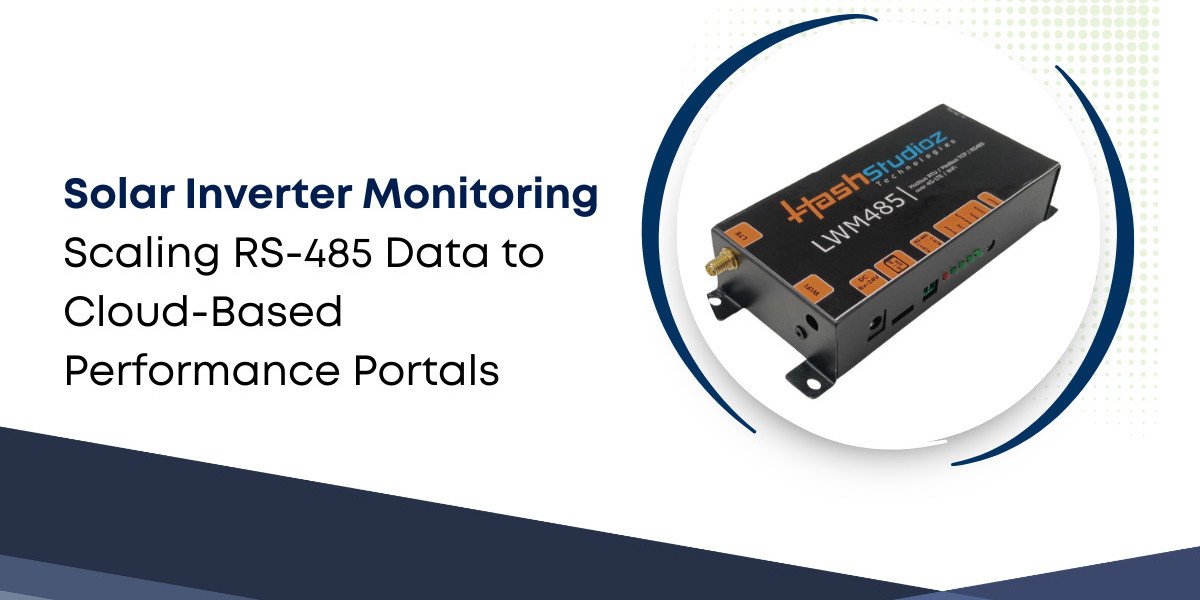
This gap creates a need for reliable data transport from field devices to cloud dashboards. A RS-485 Modbus Gateway plays a key role in this architecture. It collects inverter data and converts it into IP-based communication for cloud systems.
This article explains how RS-485 inverter data reaches cloud performance portals. It also explains the role of a Modbus Gateway, technical challenges, and practical design practices.
The Growing Need for Solar Monitoring
Solar monitoring has become essential for both small rooftop systems and utility plants. According to the International Energy Agency (IEA), global solar capacity crossed 1.6 terawatts in 2023. Large installations often contain hundreds or thousands of inverters. Operators must track each inverter’s status to maintain output.
Monitoring systems help plant operators in several ways:
Track real-time energy generation
Identify inverter faults quickly
Compare inverter performance
Improve plant availability
Reduce maintenance costs
Industry studies show that poor monitoring can reduce plant output by 3–5% annually. Even small losses matter in large solar farms.
Understanding RS-485 Communication in Solar Inverters
Many solar inverters use RS-485 serial communication. Manufacturers prefer this protocol because it works well in industrial environments.
Key Features of RS-485
RS-485 offers several advantages for solar plants:
Long communication distance up to 1200 meters
Support for multi-drop networks
High noise immunity
Simple wiring structure
Low hardware cost
Modbus Protocol in Solar Inverters
Most solar inverter manufacturers implement Modbus RTU over RS-485. Modbus defines how devices exchange data through registers.
Each register stores values such as:
DC voltage
AC output power
Grid frequency
Temperature
Energy generation
Fault codes
However, cloud monitoring systems operate through Ethernet or cellular networks. RS-485 cannot connect directly to cloud platforms. This limitation creates the need for protocol conversion.
What is a RS-485 Modbus Gateway?
A RS-485 Modbus Gateway converts serial Modbus data into Ethernet or IP-based communication.
The gateway reads Modbus RTU data from inverters and converts it into:
Modbus TCP
MQTT
HTTP
REST APIs
Main Functions of a Modbus Gateway
A Modbus Gateway performs several important tasks:
Polls inverters through RS-485
Converts Modbus RTU to Modbus TCP
Aggregates data from multiple devices
Sends data to monitoring software
Maintains communication logs
Typical Solar Monitoring Architecture
A modern solar monitoring system follows a layered architecture.
1. Device Layer
The device layer consists of field instruments like solar inverters, energy meters, weather sensors, and combiner box monitors. These devices measure electrical and environmental parameters in real time, often communicating through RS-485, providing the raw data necessary for monitoring and analysis.
2. Data Collection Layer
The data collection layer uses an RS-485 Modbus Gateway to aggregate data from multiple field devices. Depending on network design, each gateway can handle 20 to 100 devices. It polls the devices continuously, ensuring accurate and timely transmission of operational measurements.
3. Communication Layer
In the communication layer, collected data is transmitted via IP networks such as Ethernet, 4G/5G cellular, Wi-Fi, or fiber optics. Gateways ensure reliable transfer of information from the field to remote servers, enabling centralized monitoring and real-time system oversight.
4. Cloud Monitoring Layer
The cloud monitoring layer processes and stores incoming data in secure databases. It provides tools such as performance dashboards, alarm notifications, energy reports, and predictive maintenance alerts, allowing operators to monitor system health and efficiency via web browsers or mobile applications.
How RS-485 Data Scales to the Cloud
Solar farms often contain hundreds of devices. Efficient scaling ensures reliable monitoring.
1. Device Polling
The Modbus Gateway polls each solar inverter sequentially at intervals typically ranging from 5 to 30 seconds. Faster polling enhances real-time accuracy and ensures that any fluctuations or anomalies in energy production are promptly captured for monitoring and analysis.
2. Data Aggregation
Collected data from individual inverters is aggregated into structured messages by the gateway. This grouping minimizes communication overhead, reduces network congestion, and ensures efficient transmission of large-scale device information without compromising the integrity or timeliness of operational data.
3. Protocol Conversion
The gateway converts Modbus RTU data into cloud-compatible protocols such as Modbus TCP, MQTT, or HTTPS. MQTT is preferred by many cloud platforms because it is lightweight, reduces bandwidth usage, and enables efficient, reliable, and scalable data transmission from multiple devices.
4. Secure Data Transmission
Once formatted, data is securely sent to cloud servers using TLS encryption, VPN tunnels, and secure authentication. These security measures protect sensitive plant information, prevent unauthorized access, and maintain data integrity throughout transmission from the solar farm to remote monitoring systems.
5. Cloud Data Processing
Cloud platforms receive incoming messages, store them in databases, and process analytics. They calculate critical metrics like performance ratio, energy yield, and system availability, enabling operators to monitor efficiency, detect faults, and make informed decisions for predictive maintenance and operational optimization.
Key Data Points Collected from Solar Inverters
A solar monitoring platform depends on accurate data.
Typical inverter parameters include:
1. Electrical Data
Solar inverters provide critical electrical measurements such as DC input voltage and current, AC output voltage and current, and power factor. These parameters allow operators to monitor energy conversion efficiency, detect anomalies, and ensure the electrical system is functioning within safe operational limits.
2. Energy Metrics
Inverters also record energy-related data, including daily energy production, total lifetime energy, and instantaneous power output. These metrics help track plant performance over time, verify energy targets, and support reporting and financial analysis for solar farm efficiency and ROI.
3. Operational Status
Monitoring operational parameters like inverter temperature, fault codes, grid connection status, and current operating mode enables proactive maintenance. Early detection of faults or abnormal conditions reduces downtime, protects equipment, and ensures that the solar system continues to perform optimally.
Challenges in RS-485 Solar Monitoring
Despite its reliability, RS-485 communication presents several challenges.
1. Network Length Limitations
RS-485 networks have a maximum length of about 1200 meters. Large solar farms may exceed this distance. Engineers often deploy multiple gateways to solve this issue.
2. Device Address Conflicts
Each Modbus device requires a unique address. Duplicate addresses cause communication failures. Careful configuration prevents this problem.
3. Communication Noise
Outdoor solar plants face electrical interference. Proper cable shielding helps reduce noise. Twisted pair cables also improve signal integrity.
4. Data Latency
Polling many devices can slow data collection. Efficient register grouping improves performance. Modern RS-485 Modbus Gateway devices support faster polling.
Best Practices for Gateway Deployment
Good network design ensures stable monitoring.
1. Use Proper Network Topology
RS-485 networks should follow a daisy chain structure. Avoid star topology because it causes signal reflections.
2. Install Termination Resistors
Termination resistors maintain signal stability. Engineers usually place them at both ends of the RS-485 line.
3. Segment Large Networks
Large solar plants should divide devices into smaller groups. Each group connects to a dedicated Modbus Gateway.
4. Monitor Gateway Health
Operators should track gateway status.
Monitoring parameters include:
CPU usage
communication errors
network connectivity
Advantages of Cloud-Based Solar Performance Portals
Cloud monitoring systems offer several operational benefits.
1. Real-Time Performance Tracking
Operators can view plant output instantly. This capability improves response time during equipment failures.
2. Remote Access
Technicians can access monitoring dashboards from anywhere. Mobile apps support field maintenance activities.
3. Historical Data Analysis
Cloud databases store years of plant data. Analysts use this data to study long-term performance trends.
4. Predictive Maintenance
Machine learning models analyze inverter behavior. These models detect abnormal patterns before failure occurs. Research from NREL shows predictive maintenance can reduce solar O&M costs by up to 20%.
Cybersecurity in Solar Monitoring Networks
Solar plants now connect to public networks. Security must remain a priority.
Important cybersecurity practices include:
Secure authentication for gateways
Firewall protection
VPN connections
Regular firmware updates
Future Trends in Solar Data Monitoring
Solar monitoring continues to evolve. Several trends are shaping the future.
1. Edge Computing
Gateways now perform local data processing. Edge analytics reduce cloud bandwidth usage.
2. AI-Based Fault Detection
Artificial intelligence helps identify equipment faults faster. AI models analyze inverter data patterns.
3. Integration with Energy Markets
Cloud portals now connect solar plants with energy trading systems. This integration supports smart grid operations.
4. Expansion of IoT in Solar Plants
IoT devices continue to expand monitoring capabilities. Sensors now track panel temperature, dust levels, and structural health. Industry forecasts expect the solar IoT market to exceed $10 billion by 2030.
Conclusion
Solar monitoring has become a core part of modern photovoltaic plants. Operators depend on accurate data to maintain performance and detect faults quickly. RS-485 communication still dominates inverter networks due to its reliability and simplicity. However, cloud monitoring systems require IP-based communication. A RS-485 Modbus Gateway solves this challenge by converting serial Modbus data into cloud-compatible protocols.
A well-designed Modbus Gateway architecture enables large solar plants to scale monitoring efficiently. Gateways collect inverter data, convert protocols, and transmit information securely to cloud portals.